Blog

Psalm 6: I Need Gathering Up

Psalm 6 is an Ordinary Prayer. It is not one of the happy ones. It speaks of an incredibly common and poignant moment of human experience, a moment of vulnerable sadness. Basically, the psalmist is saying, “I’m falling apart.” That about sums it for me sometimes. It may be that the only thing you feel like you are able to do is just keep it together. In these moments, crying out is what one does. The question is do you have an assurance that there is anyone to cry out to?

Commentator Dale Ralph Davis has this to say about the Hebrew name for the Lord, YHWH (The Way of the Righteous in the Muck of Life). He writes that when the Lord gives his name to Moses, he isn’t saying something about his being, “I will be what I will be.” Rather as Davis says, “he is talking about — ‘But I will be with you’. So Exodus 3:14 means ‘I will be present is what I will be.’ In light of verse 12, God does not here stress his being or existence so much as his presence. And ‘Yahweh’ captures and summaries that thought — he is the God who will be present to all that his people need him to be. ‘Yahweh’ means the God who is present to help.”

So, in keeping with Dr Davis’ input, rather than using the title Lord, I am choosing to use the personal name of God — whose name that means “the God who is present to help.” Below is my paraphrase of Psalm 6. I hope you can make use of it as a prayer. But more so, when it feels like your life is turned all upside down, you will know that Yahweh is present to help.

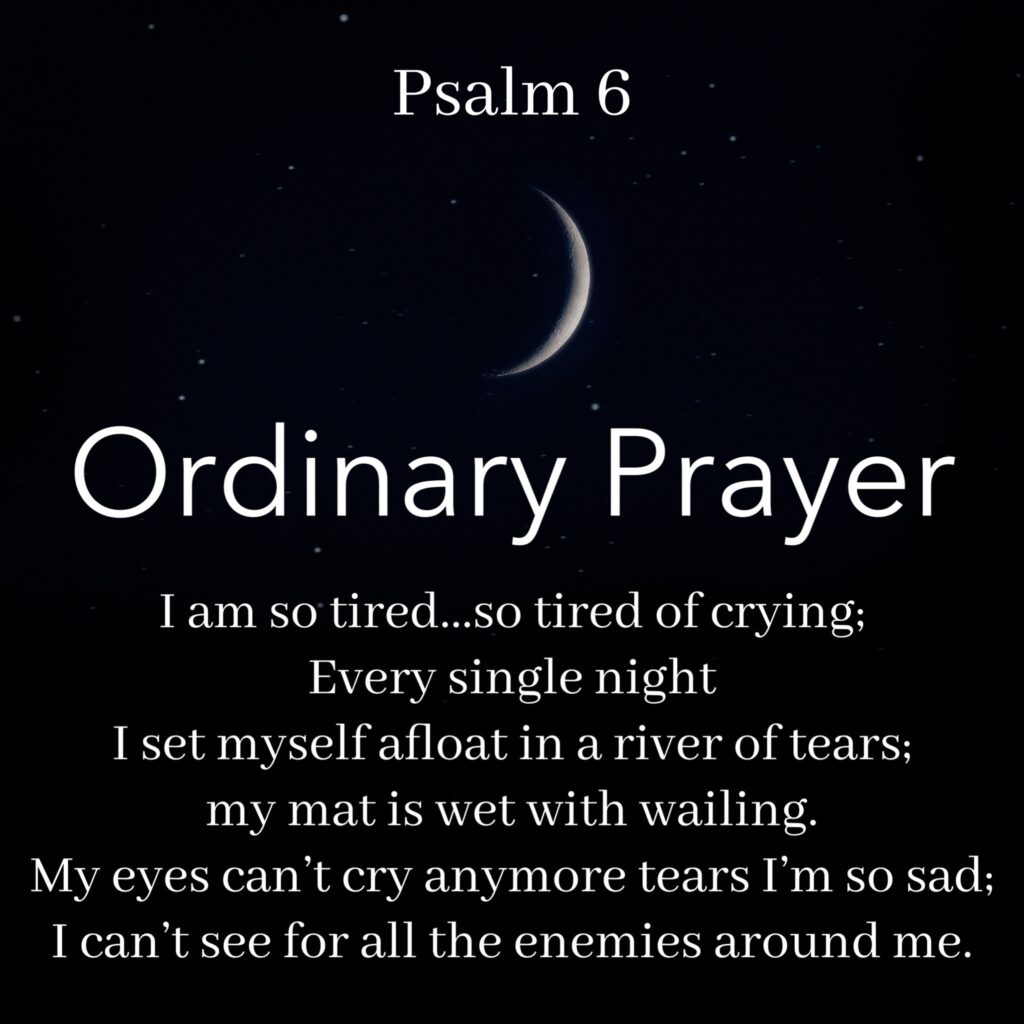
Yahweh, don’t speak hard to me when you’re mad, or jerk me up when you’re rightly upset. Please give me what I don’t deserve, Yahweh,  for I am withering; I need gathering up, Yahweh, for my resolve is shaken. My life is turned all upside down. But Yahweh? When? O when? Over here! Yahweh! Rescue me! Rescue me because your love never gives up. Who remembers you when they are dead? Who praises you from inside a coffin? I am so tired…so tired of crying; Every single night I set myself afloat in a river of tears; my mat is wet with wailing. My eyes can’t cry anymore tears I’m so sad; I can’t see for all the enemies around me. Get away! You who think its your job to do evil, For Yahweh has heard my cry, Yahweh has taken up my cause. Every one of them! Their faces will blanch white and their knees will knock, They’ll turn and run away at the first sight. © Randall Edwards 2020. This paraphrase of Psalm 6 is for Christ’s church. If it is helpful, please feel free to copy or reprint in church bulletins, read aloud, or repost. I only ask that an attribution be cited to myself (Randall Edwards) and my other blog (backwardmutters.com)

Ordinary Prayer

“Then Pertelote began to recognize one of the sounds—and she was filled with wonder. Slowly, slowly she lifted up her head. She looked toward the forest. Then she sat up, astonished. There, on the topmost limb of the tallest tree, stood Chauntecleer, his wings wide like an eagle’s. He was crowing lauds as lauds had never been crowed before. The tree dipped and swayed from the impact, but Chauntecleer rode the motion and crowed: Lauds was his challenge to the hidden fury of the river, to Cockatrice.”

Wangerin Jr., Walter. The Book of the Dun Cow (p. 203). Diversion Books. Kindle Edition.

This passage from Walter Wangerin’s fable, The Book of the Dun Cow, comes at the crisis moment. The story itself is a fable about a chicken coop comprised of a variety of companions and vilians. The coop is ruled by its rooster, Chaunticleer, among whose duties is to crow the canonical hours of the day. Each morning at dawn, Chaunticleer rises and crows lauds which is the prayer that is prayed at dawn. This is the context of the quote.

The striking thing about it in this passage is that this morning is the morning of the battle of which the entire story has been moving. Cockatrice, the demon-dragon has come to attack the chicken coop and destroy its community. Even though this is the battle morning, Chaunticleer does what he has done every morning time out of mind. He crows lauds. This small thing in the face of a really big thing makes all the difference for me. (I think it was Tish Harrison Warren’s book, Liturgy of the Ordinary which first brought this story and event to my attention, but I cannot trace it out. All that’s to say, I’m not the first to put these two together.) In seasons of “hidden fury,” the daily, unchanging, ordinary, small, unacknowledged, discipline becomes an an anchor for us. The simple act of rising at dawn and saying your prayers may not seem to be the biggest thing you will do any day, but over days, weeks, months, and years, you may likely look back and conclude that the simple activity of daily prayer was the biggest thing you did over the course of your life.

At Grace, we want to do significant, special, important works, but we also want to be the kinds of people who are shaped by small disciplines. We may not have opportunity to stand out and be praised or thanked for a great achievement, but we can and want to be the kinds of people who are tending to the daily habits which God has called us to and to which he has promised promote blessing.

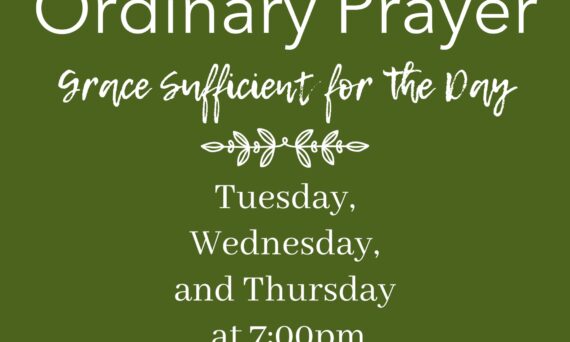
One of the ways we are trying to do this is something called Ordinary Prayer. Through the season of Ordinary Time, Pastor Randy is leading a thirty minute prayer time in which we pray the ordinary prayers of God’s people, the Psalms. Each Tuesday, Wednesday, and Thursday, we gather via Zoom, read that day’s psalm and pray for one another and the church. We hope you can join us. See Pastor Randy for the Zoom link.

What is Systemic Racism?

I am meeting with some local pastors to talk about racism in the church and in our community. I have been humbled by the willingness of my black and African American brothers and sisters in Christ who are sharing, speaking, helping me learn, and calling me to a fuller understanding of where the gospel of Jesus needs current application to set people free.

Today we discussed systemic racism. You may have heard it expressed as white privilege. The discussion often shuts down when people say, “White Privilege? We came from poor Scotch-Irish descent. We were kicked out of every place we ever went! We were share-croppers and mill workers. We didn’t have any privilege!” It’s sad that the conversation shuts down at this point because there is so much opportunity to listen and learn and love. If you’re asking, What does that mean? What is white privilege? What is systemic racism? Here’s a little video that we watched today that explains it.

Please note. My offering of this video does not endorse a political party or larger agenda by any organization. My sole concern is for the Kingdom of God and for its advancement. In general, as we engage in public discourse about very serious matters and as we debate with those with whom we disagree, it is important that we understand the place from which they are coming. To be able hear and to articulate the views of others is an act of charity.

Ordinary Prayer: Psalm 12

I am growing in my appreciation of the Psalms — a reality that probably exposes my shallow and slow-wittedness. Since the beginning of Ordinary Time, we have continued to meet via Zoom to pray for the thirty minutes each Tuesday, Wednesday, and Thursday evening at 7:00pm. I’ve called this time Ordinary Prayer.

The psalms are ordinary prayers. They were composed by kings and prophets and sung by shepherds and fisherman. They were good for singing in the Temple, and they were good for the Galilean countryside. These are the words and word pictures of God’s people who themselves, like us, fought the fight of faith in the midst of extraordinary events and ordinary days.

Along with praying the the Psalms, I’ve undertaken, it seems, a project to paraphrase them. I have a bit of a poetic sensibility, and recognize the value of translating through metaphor and different words in order to get at the meaning. Some of the psalms can be difficult for us to translate so that they mean something to us. Once however, we get to their meaning, we find that they express the life of faith, the desires of the heart, and the needs of those who find themselves in a place where there is nothing left but to pray.

Here’s a stab at Psalm 12, which we will be looking at tonight during Ordinary Prayer. The psalmist speaks of the toxicity of the rumors and lies of the world. I found, as I read it, that it speaks very much of today’s social media climate and so I paraphrased the psalm in an attempt to make use of social media’s toxicity and our ability to trust and see the worth of all the Lord’s words or maybe, his “posts.”

Help! I’ve no friends left.
All the good and godly have disappeared from among Adam’s kids. 
Not a good one remains.
On social media, they’re all cool and chill
But their secret heart speaks hate and lies.

May the Lord unplug all your devices
And silence your streaming feeds of lies,
You who say, “With our algorithms and bots,
Who can silence our posts?”

Because they steal from the poor,
Because those who need are targets,
Because they have no words but groans,
I will help them myself, says the Lord.
I will lift their eyes from their screens 
And show them the place for which they’ve longed.

The Lord speaks with a single heart,
And his posts are worth it: true and bright.
You couldn’t compose them better if you had a week.
The Lord means what he says;
He’ll defend you from the mob.

The trolls are out there around every corner,
And the filth they post is praised by Adam’s kids.

© Randall Edwards 2020. This paraphrase of Psalm 11 is for Christ’s church. If it is helpful, please feel free to copy or reprint in church bulletins, read aloud, or repost. I only ask that an attribution be cited to myself (Randall Edwards) and this blog (backwardmutters.com

Ordinary Prayer: Psalm 10

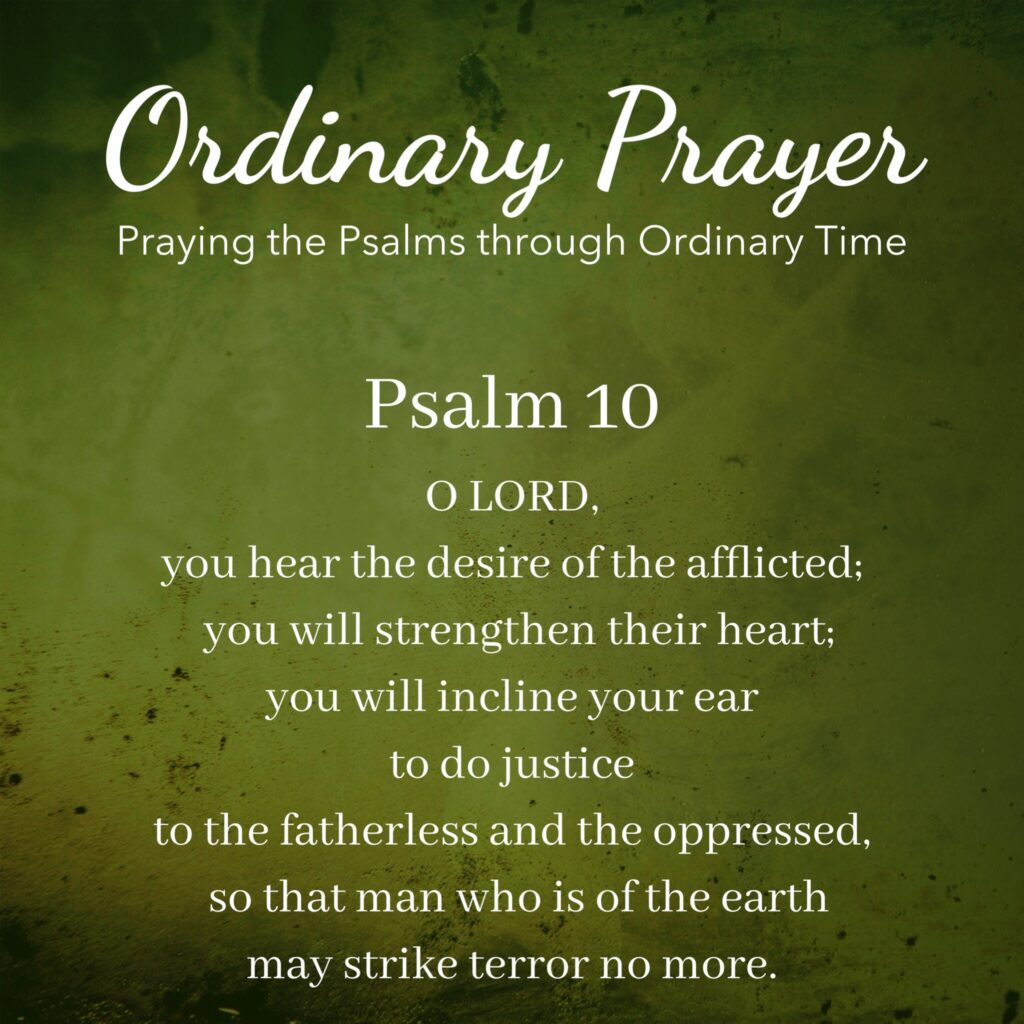
This is a paraphrase of Psalm 10 which Pastor Randy hopes you can use as a part of your ordinary prayers. You may read Psalm 10 HERE.

Why Lord, Why? Why do you stand off?
Why, when trouble finds me, I can’t find you?

These earthly men have no shame, these wicked who chase the poor down and run them into the traps that they’ve set for them.
And when the earthly man has done so, he brags how he’s gotten everything he has ever wanted. 
Boasting, he laughs to himself, “I got it all on my own!”

Sneering with pride, the wicked don’t care where the Lord is, they only think, “There’s no God.”

The earthly man gets what he wants here and now. You are far beyond his comprehension.
As for his own enemies, he struts around in front of them like a rooster.
He says, “No one makes me step aside. No one can touch me.”
The aerosol droplets of his curse words, lies, and demands spit from his mouth the infection of his sin-virus and works all kinds of mischief.
He is just waiting to cause trouble. It’s like he just spends his spare time making plans to kill innocent people.
Like a lion, he looks to pounce on the helpless as he watches from the shadows.
Like a trapper, he waits to pull the snare. He watches that he might entangle the poor in his net.

Those of us who before were bent by trouble, the earthly man now breaks and beats down.
He says, “See? God doesn’t care. He doesn’t see you and doesn’t care what I do!”

Lord! Now! Now!
Come! Do something! Don’t forget us!

How can the wicked go on thinking they can do whatever they please?

Oh, but Oh Lord, you do see. You mark their mischief and trouble-making that you may take matters into your own hands. 

Lord, we’re reaching out to take your hand, for you are the one who takes in hand those who have no one.

Slap back the earthly man’s arm, shorten his reach, frustrate his schemes, settle his account, make him pay his bill’s full amount.

You Lord are the boss of everyone: kings, presidents, and CEO’s; they are all beholding to you. Nations, agencies, kingdoms, and corporations are nothing.

Lord, Lord, you do hear.
You do hear the cries of those in need.
You will give them courage.
You will find them and listen to every last word they have have to say so that justice is worked for those who are alone and beat down
— for those who have no one but you, so that the earthly man won’t make anyone afraid ever again.

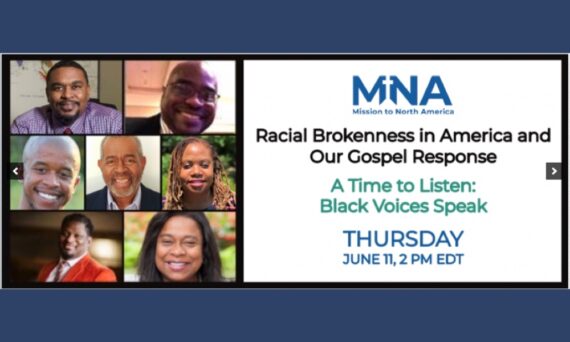
Racial Brokenness in America

If you are looking for help in understanding the events underlying the current racial unrest and protests and how our denomination’s African American leaders are dealing with these issues, this conversation will be a great place to start to listen and learn.

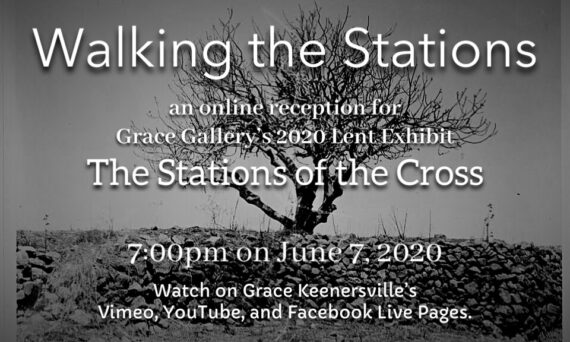
Walking the Stations

Sunday, June 7 at 7:00pm is an online reception for Grace Kernersville’s Lent and Easter art installation titled, The Stations of the Cross. Join Kevin McClain of Gate City Gate House, Randy Edwards of Grace Kernersville, and Keaton Sapp whose art makes up the exhibit for an online reception to discuss the exhibit, art, and the place of beauty in the life of the church. The event will conclude with a virtual walking of the stations.

You may access the handout which includes the scripture passages, artwork, and poetry via this link: HERE

https://vimeo.com/424987126

We Are Thirsty

On Sunday we continue our series in Galatians titled, The Free Life. This Sunday’s passage contains one of the most counter-cultural verses in the Scriptures. Paul writes,

For as many of you as were baptized into Christ have put on Christ. There is neither Jew nor Greek, there is neither slave nor free, there is no male and female, for you are all one in Christ Jesus. And if you are Christ’s, then you are Abraham’s offspring, heirs according to promise.

Galatians 3:27-29

It is such a beautiful reality. Our relationship with God is not contingent upon our race or socio-economic status or sex, for we are all one in Christ Jesus. And because that is our reality with God, it is the reality with God’s people…at least it should be. These past weeks have reminded us of how far we have yet to see it realized. It is in fact the same kind of world to which Paul was writing.

In Galatia, Antioch, and Jerusalem, life was full of much the same. Political unrest, mobs, corruption, injustice, brutality, crime, famine, and disease. How any Christian in any time responds to those realities is one of the most significant things a Christian does each day. How we step forward in faith is the ongoing, burning question of each of our Christian lives. The Galatians found themselves tested and tempted by the law-reliers (the Judaizers) who offered security through a way of life that would in effect bypass the dynamic life of faith for the static status of self-reliance.

Paul tells the Galatians that a Christian steps into and lives out the New Life not by taking something off (i.e. circumcision) but by putting Christ on. And putting Christ on means not merely exchanging my dirty garments for his clean ones, but it means taking up his cross to suffer with him, showing forth his love to our neighbors, living in meekness and humility as he did. It means embodying hope as we take up and put on his resurrection which is a promise fulfilled but one that is still being realized. Yes, it is being realized, but it is in this way: in our clay vessels is deposited a treasure that far outweighs our light and momentary trials. We are being renewed by his Spirit which dwells within us day by day.

Even so, as much as we put on Christ and rejoice in Him who has given us the victory, we continue to thirst for him. Rather than being a deficiency in the gospel or in the salvation Jesus has secured, our thirst is current situation in which we find ourselves. This is the ongoing cry of God’s children, “We are thirsty, Lord. Give us the living water.” Thankfully, the Lord is eager to give us that water.

The danger for Christians are not the wars, famines, pestilence, or even death. The danger is that we quit asking. It’s just too much to cry out for more. It’s too much to wait on him. It’s too much to endure the suffering without knowing the immediate conclusion. We look for anything to give us leverage against the unknown. We double down on rules, mandates, schedules, and lists. These things will save us or at least give us a sense of accomplishment as we endure waiting the trouble out.

Volitionality is important. It is an important marker of having a personal sense of freedom, but it is not freedom itself. In the unrest and uncertainty of this past week and last months, along with all that needs doing (and there is much), we need to pray out our need and disappointment, anger, sadness, and thirst. The prayer of Lament is a helpful place to start. And as you pray, ask the Lord for the Water of Life which restores the land and satisfies the people.

Should you like some direction on praying out the cry of thirstiness, here are a couple of Psalms to consider reading and praying through: Psalm 3, 22, 62, 64, 69, 70, and 77.

Pentecost

imagejpeg_0-2

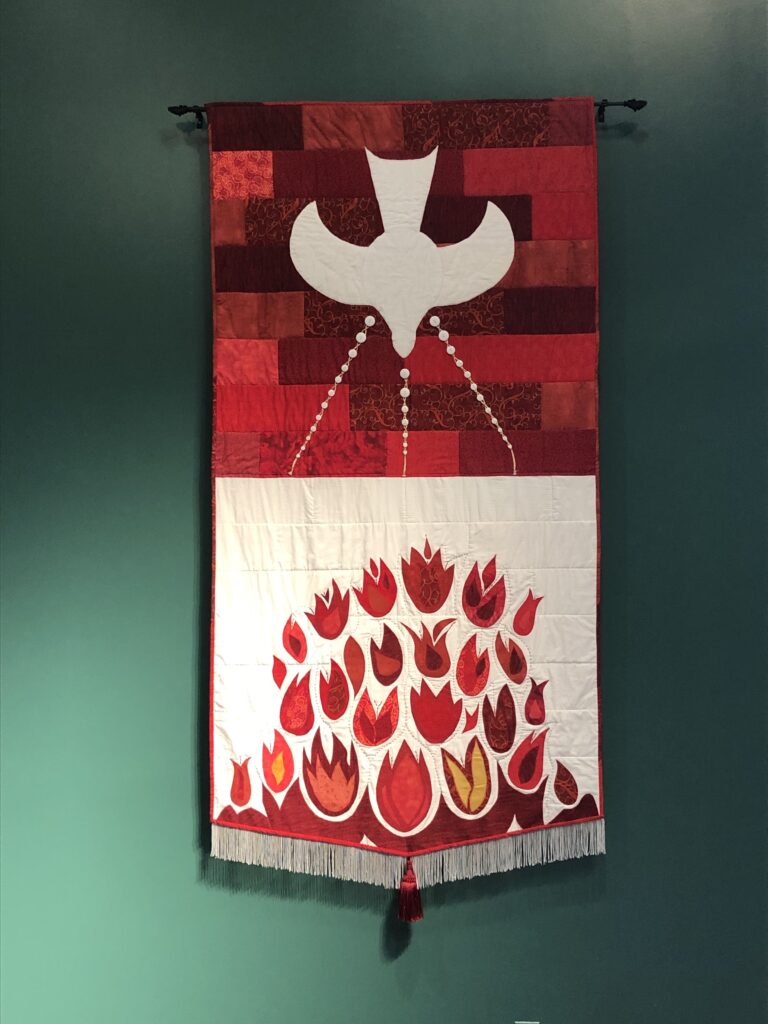
This Sunday is Pentecost. Pentecost means “fiftieth”, and it is 50 days following the first Sunday after Passover Sabbath or Easter Sunday. Pentecost is the feast of weeks in the Jewish calendar and was the time in which the first fruits of the harvest were gathered and offered to God. Thousands more had gathered in Jerusalem for this festival, but the disciples, who had witnessed Jesus’ ascension ten days earlier, stayed in Jerusalem to wait, as Jesus commanded, on the coming of the Holy Spirit. Having continued to gather in the Upper Room to pray and worship, on Pentecost, the disciples received the Holy Spirit who entered their room as a Mighty Wind and who descended upon them as tongues of fire. This event marks the beginning of New Creation in the life of the church. Sometimes Pentecost is referred to as the birthday of the church. In this light, it is an appropriate term. New Creation has come.

The Holy Spirit did not merely come to give life, but the Holy Spirit came to empower the disciples to proclaim the gospel and to equip them to minister in Jesus’ name. Empowered by the Spirit, the disciples are gifted to speak so that all those gathered in Jerusalem heard the gospel proclaimed in their native tongue no matter from where they came.

On Pentecost, the Holy Spirit descends to hover over the chaos of the world and brings to fruition the command of the Word. Applying the new creation, the Holy Spirit unites the disciples to Christ and restores our relationship with the Father. But we are not only restored to God, but we are restored to one another. For at Pentecost (and through Christ), the Holy Spirit, undoes the curse of Babel. Humanity is being united, not in an endeavor of striving up to lay hold of heaven, but through the grace which reaches down to gather us in.

What Kind of Spell?

This Sunday we continue our look at the Free Life which we have in Christ and as Paul describes in Galatians. Specifically we will be looking at the first nine verse of chapter three, Galatians 3:1-9. In addressing the issues faced by the Galatians, Paul has laid forth the events and circumstances which have led to his and their current situation: some have come claiming they have greater authority and are promoting a greater gospel. Their claim, of course, is false, and if they are to be believed, it will lead to undermining the gospel and will bring about the condemnation of any who embrace it because it really is not any sort of gospel.

In Galatians 3, Paul asks a series of six questions. The first of which is “Who has bewitched you?”  The word for “bewitch” refers to speaking and speaking in such a way as to slander or speak ill of someone even to the extent of giving them the evil eye. Maybe someone has looked at you angrily, and you’ve through, I can see what you’re saying. Just as you know that words can influence to harm or wound, you also know that a good, kind word has the power to turn our day around, to invigorate and strengthen us, to motivate, relieve, give joy and comfort, bring about thanksgiving. Words do have power.

The English word, “spell,” comes from an early word which means “to tell.” We get this sense when we say that we had to “spell it out” for them. In addition this gets at the more common understanding of a letter by letter telling of events or details in the way in which we might spell a word.

“Spell” is also word that describes an incantation by which a spell is cast in order to influence or bring about a desired end. It is a way to make what you want, happen — to have blessing apart from faith. Rather than praying to ask God for help, it is speaking to get what you want. When Paul asks the Galatians, “Who has bewitched you?” he is asking, Who has cast a spell on you? That spell is not the gospel, it is not good-news or a good tale.

C.S. Lewis, in his sermon, “The Weight of Glory,” seeks to draw his listeners into an awareness of the longing for more than what we have experienced or can even hope to experience in this life. As he does so, he asks, “Do you think I am trying to weave a spell?” He answers his question with this,

Perhaps I am; but remember your fairy tales. Spells are used for breaking enchantments as well as for inducing them. And you and I have need of the strongest spell that can be found to wake us from the evil enchantment of worldliness which has been laid upon us for nearly a hundred years.

Paul’s question for the Galatians is a good question for us. What words have come to influence us? What thoughts, words spoken, conversations imagined or real have set the course for day — even our life? Have they been good words? Do they speak of the love of the Lord? Do they strengthen and fortify or do they tear down and curse? It is also worthy to note that rather than continuing with the word “spell” in his above quote, he uses the word “enchantment” — a word which has at its heart, “chant” or “sing”. What songs are you listening to today? Are they re-enchanting you in the goodness of the good news, the gospel? OR are they disenchanting you and pulling you down into skepticism, cynicism, and unbelief?

One way we’re trying to help the enchantment is to create playlists of the music we will be singing each Sunday. I’d encourage you to make use of these playlists to get the good song deep into your heart. Here’s our new YouTube Playlists Page. Check it out and listen.

As for this Sunday’s worship service, you may view the bulletin here: Order of Worship 05.17.20. You may listen to this week’s playlist playlist HERE.

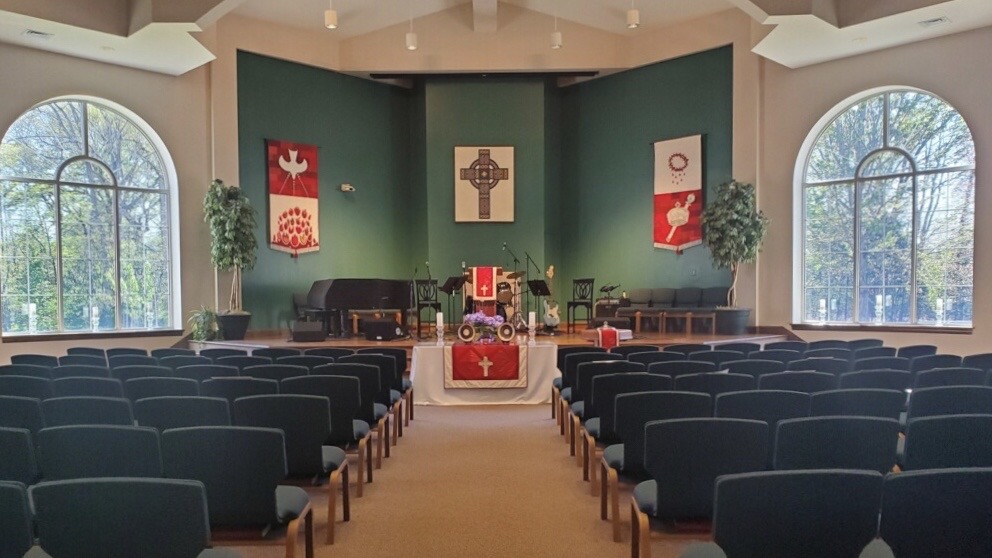
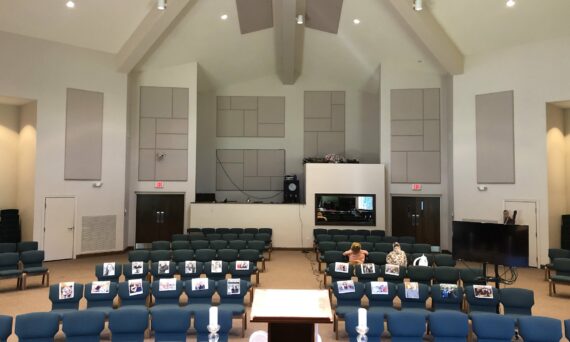
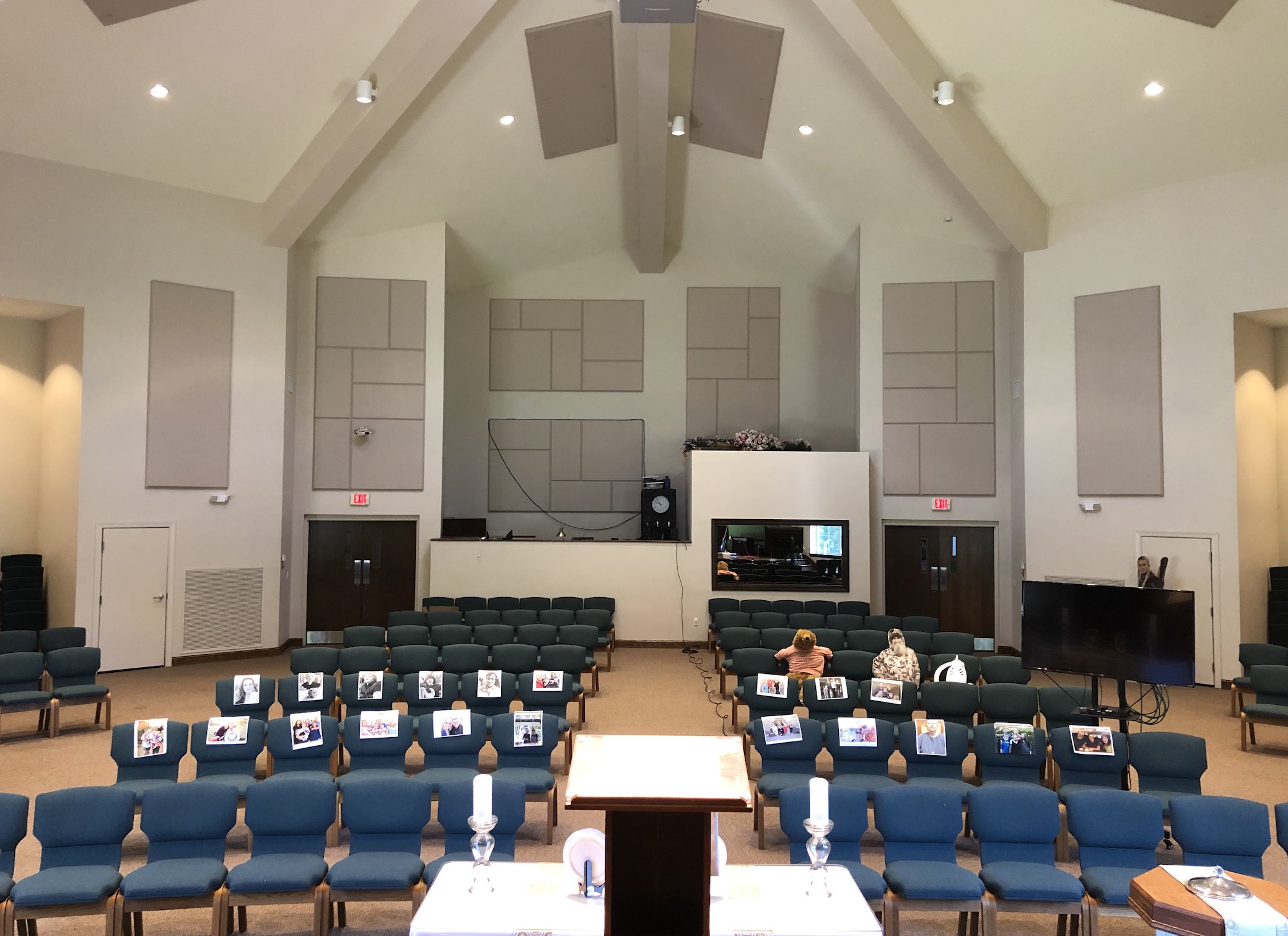
Lastly, you are sorely missed. The picture is of Grace’s socially distanced sanctuary set up. It will be great to have us together again. Lord willing, soon. Until then, work on your spelling.

sanctuary